 |
 |
 |
 |
 |
|
 |
|
 |
|||||||
|
|
|
|
|
|
|
|
|
|||||||
Paul Gosselin, anthropologist (3/4/2026)
Sorting Out Terminology
Wiki observes that "Postmodernism is a highly contested term, referring to "a particularly unstable concept", that "names many different kinds of cultural objects and phenomena in many different ways". It may be described simply as a general mood or Zeitgeist.". In this text, postmodernism shall be explicitly examined as a worldview or belief system, or if you like a "semi-materialistic religion". Postmoderns are typically in denial about personally having a belief system or religion.
This is a very useful defensive mechanism, shielding their beliefs from comparison and critique...
While mainstream media terms such as progressive or woke are often seen as equivalent and have become established currency in Western culture, the woke concept is particularly deficient in that it appears out of nowhere, providing no linkage to previous cultural developments in the West. For the most part it has replaced the expression "politically correct". The progressive concept is a little better as it connects back to a concept central to the Enlightenment, that of Progress. Yet progressives in 2026 differ in many regards to Enlightenment devotees, and for this reason I prefer the term postmodern, which avoids such pitfalls. But to sort out such issues, a little history is required.
A ideologico-Religious Genealogy of the West
If I were asked to provide a nutshell view of Western civilisation I'd say that in the West, the Greco-Roman worldview sank deep roots, centuries before Christianity appeared. While typically the Middle Ages are regarded as the ultimate “Christian era” of the West, in point of fact the West has never been purely Christian at any point in its history. Even during the Middle Ages when Christian churches had control over healthcare, education, the arts and much influence in politics, the West has ALWAYS been schizophrenic in terms of worldviews, with Western elites harbouring elements of pagan Greek and Roman thinking while the masses harboured elements of European pre-Christian religions, all of which was covered over with a veneer of Christianity. As a result, in the West Greco-Roman influence found itself in a relationship with the Judeo-Christian worldview that was both symbiotic and parasitic. Petrarch (1304-1374) is a good representative of Western elite harbouring elements of pagan Greek and Roman thinking. In his groundbreaking work on the history of science, Stanley L. Jaki makes the following observations regarding Petrarch's worldview (1974/1986: 248)
Whether he was truly the first modern man and the first Alpinist to boot, is a matter of definition. His Secretum, an emulation of St-Augustine's Confessions, give and unmistakable insight into the deepest recesses of his aspirations and motivations. Whatever Petrarch's professed admiration for Augustine's spiritual ideals, he anchored his own programme of spiritual perfection in the dicta of ancient Greek moralists. The Bible and the Fathers were completely ignored by him in this respect. In fact, he showed no interest in theology. This should not suggest that the external world, as an object of systematic study, had any appeal to him. Secular learning found no real advocate in Petrarch. His distaste for law, which he studied for some seven years, was intense, as was his dislike for medicine. What attracted his to the spirit of classical antiquity consisted in a self-centred estheticism and philosophical mysticism which dominated classical thought during much of the Hellenistic period.
Once this is taken into account, it becomes clear that the Renaissance was not just an artistic or architectural fad, but, more profoundly, a more or less subtle attempt by some to escape Judeo-Christian influence and develop an alternative worldview, that is to recreate a civilisation based on Greco-Roman thinking (just the concept of "Renaissance" (or Rebirth) begs the question, rebirth of what?). But with the rise of natural science (and it's growing prestige) in the West, the great prestige long enjoyed by Greco-Roman philosophers for so many centuries began to erode. Some of those who'd jumped on the Renaissance bandwagon came to realize they'd bet on the wrong horse. Another alternative to the Judeo-Christian worldview was needed.
The Enlightenment[1] (or Modern) worldview was the next step. All worldviews have to answer a basic question: Where is Truth? Where do you find the deepest wisdom? For Renaissance thinkers, Greco-Roman philosophical thinking was the answer. But by the 16th century, times had changed and the Enlightenment/Modern view began taking shape. Facing the fact that the prestige of Greek philosophy was going down the tubes, Western neo-pagan elites needed a new horse to bet on. And this is where the Enlightenment comes in. These elites saw that the rising prestige of experimental science offered a golden opportunity. Early scientists (then known as “natural philosophers”) may not have intended to attack the authority of Scripture, but Francis Bacon's “Two Books” view (Scripture with authority in the spiritual realm and science in the material realm, becoming thereafter Science) opened the door to setting up science as an alternative source of TRUTH. And subsequently this lead to the concept of technocracy, that is nations run by a priesthood of experts (somewhat along the lines of Plato's Republic) whose authority and prestige rested in scientific and technological knowledge. So the Enlightenment worldview has a Gnostic strand, initiation into hidden knowledge.
Early Enlightenment thinkers quickly realised that the growing prestige of science could be of use to them. This set the stage for the prestige of science being exploited for ideological purposes and scientists to become the new priesthood. We are talking here about the mature phase of the Enlightenment (not to the immature Deistic phase with people such as Voltaire, Descartes and Benjamin Franklin). It should come as no surprise that setting up Science as the sole source of Truth leads to materialism, as real science has to do with observable phenomena. As mentioned above, the Progress concept was a critical element of Enlightenment dogma, and in fact Charles Darwin's Theory of Evolution may be seen as little more than applying the Progress concept to the biological realm[2]. Anyone adding a capital S to the word "Science" in their writing is a conscious or unconscious devotee of this ideologico-religious current. Which brings us to Scientism, the view that only science leads to Truth. And of course Scientism leads to the establishment of a scientific priesthood, the technocrats or experts, with their “Follow the Science” slogans... Richard Dawkins' famous statement In The Blind Watchmaker clears things up and exposes the ideological necessity for Darwinism (1986: 5-6): “Although atheism might have been logically tenable before Charles Darwin, Darwin made it possible to be an intellectually fulfilled atheist.”
Morality, in a materialistic world-view, is a bit like the corpse of a person who has just died a violent death. Even if there is no pulse, the corpse's members may twitch and jerk for a while, but eventually all movement will cease. Western society is like that corpse, there are some moral reflexes left in the body, but for the most part they have been disconnected from their life-force and, given time, eventually all moral reflexes may cease.
Further down the timeline, postmoderns appear on the scene. Since I equate postmodernism and progressivism, it should be pointed out that the concept of progress itself is a central concept in the Modern/Enlightenment worldview. While postmoderns have borrowed this modern concept, they have broken with the modern worldview in other respects. It should be pointed out that when I use the term postmodern I am not just talking about a passing architectural fad or a handful of French intellectuals such as Lyotard and Derrida. Postmodernism is a much wider movement. For starters, postmoderns have rejected the Modern/Enlightenment answer to the question: Where is Truth? It is a core Enlightenment dogma that Truth (or the deepest wisdom) is found in Science. Postmoderns on the other hand reject science as universal or true in any absolute sense and view it as no more than a particular Western belief system (though these hypocrites dare not question Darwin). In the postmoderns' view, the only "truth" left is that of the individual. It should be noted that because postmoderns reject Science as Truth, there is one telling repercussion: this leads to a rejection of the materialism that characterized Western elite thinking in the 20th century and 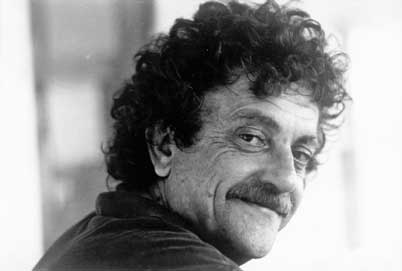 widely opens the door to the occult and pre-Christian paganism.
This is a road that the American sci-fi novelist (and WWII veteran) Kurt Vonnegut travelled. Here is his rambling description of his deconversion from the dogma of materialism and Enlightenment utopias (drifting on into postmodernism) that he provided in a speech for a high school graduation, (1975: pp. 161-162):
I thought scientists were going to find out exactly how everything worked, and then make it work better. I fully expected that by the time I was twenty-one, some scientist, maybe my brother, would have taken a color photograph of God Almighty and sold it to Popular Mechanics magazine.
Scientific truth was going to make us so happy and comfortable.
What actually happened when I was twenty-one was that we dropped scientific truth on Hiroshima. We killed everybody there. And I had just come home from being a prisoner of war in Dresden, which I'd seen burned to the ground. And the world was just then learning how ghastly the German extermination camps had been. So I had a heart-to-heart talk with myself.
"Hey, Corporal Vonnegut," I said to myself, "maybe you were wrong to be an optimist. Maybe pessimism is the thing."
I have been a consistent pessimist ever since, with a few exceptions. In order to persuade my wife to marry me, of course, I had to promise her that the future would be heavenly. And then I had to lie about the future again every time I thought she should have a baby. And then I had to lie to her again every time she threatened to leave me because I was too pessimistic.
I saved our marriage many times by exclaiming, "Wait!; Wait! I see light at the end of the tunnel at last!" And I wish I could bring light to your tunnels today. My wife begged me to bring you light, but there is no light. Everything is going to become unimaginably worse, and never get better again. If I lied to you about that, you would sense that I'd lied to you, and that would be another cause for gloom. We have enough causes for gloom.
(p. 163-64) I know that millions of dollars have been spent to produce this splendid graduating class, and that the main hope of your teachers was, once they got through with you, that you would no longer be superstitious. I'm sorry I have to undo that now. I beg you to believe in the most ridiculous superstition of all: that humanity is at the center of the universe, the fulfiller or the frustrator of the grandest dreams of God Almighty. If you can believe that, and make others believe it, then there might be hope for us. Human beings might stop treating each other like garbage, might begin to treasure and protect each other instead. Then it might be all right to have babies again.
Many of you will have babies anyway, if you're any thing like me. To quote the poet Schiller: "Against stupidity the very gods themselves contend in vain." About astrology and palmistry: They are good because they make people feel vivid and full of possibilities. They are communism at its best. Everybody has a birthday and almost everybody has a palm.
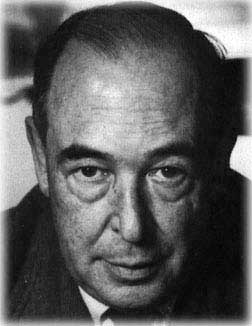 Though CS Lewis probably never used the term "postmodern" in his That Hideous Strength novel (many years before Vonnegut) he did describe the workings of the NICE organisation and the shift away from materialism, a core dogma of modernism (1945/2015: 185-186)
A junction would be effected between two kinds of power which between them would determine the fate of our planet. Doubtless that had been the will of the dark eldils for centuries. The physical sciences, good and innocent in themselves, had already, even in Ransom's own time, begun to be warped, had been subtly manoeuvred in a certain direction. Despair of objective truth had been increasingly insinuated into the scientists; indifference to it, and a concentration upon mere power, had been the result. Babble about the élan vital and flirtations with panpsychism were bidding fair to restore the Anima Mundi of the magicians. Dreams of the far future destiny of man were dragging up from its shallow and unquiet grave the old dream of Man as God. The very experiences of the dissecting room and the pathological laboratory were breeding a conviction that the stilling of all deep-set repugnances was the first essential for progress. And now, all this had reached the stage at which its dark contrivers thought they could safely begin to bend it back so that it would meet that other and earlier kind of power. Indeed they were choosing the first moment at which this could have been done. You could not have done it with Nineteenth-Century scientists. Their firm objective materialism would have excluded it from their minds; and even if they could have been made to believe, their inherited morality would have kept them from touching dirt. MacPhee was a survivor from that tradition. It was different now. Perhaps few or none of the people at Belbury knew what was happening; but once it happened, they would be like straw in re. What should they find incredible, since they believed no longer in a rational universe? What should they regard as too obscene, since they held that all morality was a mere subjective by-product of the physical and economic situations of men? The time was ripe.
And more recently, looking at pop culture, the Harry Potter novels sold a generation on the idea that the occult/magic, is cool. This brings to mind a university professor I ran into in the late 1970s who then was a hard-core atheist and fervent Marxist, encouraging students to enlist in the battle against capitalism. Back then, I also took a course in Marxist Theology (or officially known as “matérialisme historique”). Oddly enough, some years later (AFTER the fall of the Iron Curtain) I bumped into this professor again and by that point became aware that he'd defrocked from his hard-core materialism and was into the occult and astral voyages, and promoting such in his university classes. He had become a shaman... My 2025 review of a Jonathan Cahn book (see below) provides further evidence of how widespread this phenomenon is, even gaining converts among the political and cultural elites. Sadly many Evangelicals VERY naively interpret the postmodern rejection of materialism as an "encouraging sign" and a "new openness to religion", and fail to see where this leads many postmoderns, including my old Marxist professor...
Postmoderns as Reactionaries...
One should be aware of the fact that the Modern/Enlightenment belief system is largely a reaction to the Judeo-Christian outlook, which was dominant in the West. It was first of all a rejection of the Judeo-Christian cosmology and in particular Genesis. The modern system of belief rejected the core presuppositions of Christianity as expressed in the Bible. For moderns the source of truth was no longer to be found in some form of revelation (or in Greek philosophy), but in Science and Reason. Empirical observation was supposed to lead us to the Absolute, to TRUTH. If Americans have the motto “In God We Trust” on their bills, a fitting motto for the Modern view would be In Man (or Reason) We Trust! In the modern belief system, scientists, technicians and educators became the high priests (or philosopher-kings) leading the masses out of captivity from religious superstition and on to the land of progress where oppression would be eliminated and all wars stopped because all have learned to be rational and tolerant...
In the same way the modern outlook was a reaction to the, then dominant Judeo-Christian world-view, the postmodern is, as its name implies, a reaction to the modern, but is also the pursuit and continuation of the modern reaction to the Judeo-Christian world-view in the sense that is a reaction to various Western cultural concepts with links to the Christian world-view. In fact, postmodernism is an even more extreme reaction to Christianity than modernism (the Enlightenment) ever was. This explains why postmoderns demand that everyone should be tolerant, but when it comes to Judeo-Christian moral norms or beliefs, postmoderns show very little tolerance. While the postmodern quest to eradicate the West of any cultural or legal concepts linked to the Christian world-view is typically implicit, some postmoderns inadvertantly say the quiet part out loud. For example, Darializa Avila Chevalier, who co-founded the Columbia University Apartheid Divest group at Columbia University has a mission statement that include this : "We are Westerners fighting for the total eradication of Western civilization."
Postmoderns like the expression "Hate Speech". This is a rhetorical weapon often used when postmoderns deal with Judeo-Christian moral norms. It should be noted that the expression "Hate Speech" actually says nothing about the emotional state of the person/group targetted, but it does provide evidence of speech that postmoderns hate. In essence it is nothing more than a manipulative (guilt-mongering) technique to tell someone to shut up. One common spin on Postmodernism (see reference to Showalter article below) is to claim that this belief system is entirely derived from French post-war thinkers such as Michel Foucault, Jacques Derrida, and Gilles Deleuze. This is an over -simplification. While these French thinkers certainly did contribute to the Postmodern current (especially in American universities), other less well known thinkers and cultural forces also contributed.
The Inivisible Religion
While in monotheistic religions you typically get explicit creeds, that is lists of beliefs (a sacred text and/or creeds and cathecisms) and one can find much the same in modern belief systems (in their manifestos or published political programs), postmoderns however (much the same as Freemasons) typically deny their religious perspective and keep their core beliefs buried, out of view. If you want an explicit list of postmodern beliefs, typically you're on your own (or check out my proposal).
Once the postmodern worldview is understood as a reaction to the Judeo-Christian world-view, then this explains postmodern's paradoxical view of Islam. Western postmodern elites have granted Islam the status of a "protected victim minority." Indeed, it is in their interest to use Islam as a cultural wrecking ball to help them eradicate any vestige of Judeo-Christian influence in Western culture or institutions. Thus, the fact that Muslims are considered perpetual victims is no coincidence, but a deliberate political decision. Since postmodernism relentlessly attacks and erodes any Judeo-Christian influence it can find in the West, it chooses ideological allies such as Muslims to assist it in this endeavor. Immigration policies in the West play into this. Yet, the day may come when the goals of the postmodern elites are achieved, Muslims should then expect to be violently dumped by them... The party will be over. It is possible that propaganda promoting LGBTQ ideology in Islamic countries could be the spark that breaks this alliance... Time will tell.
And getting into our own time period, while postmoderns (typically in power in politics, academia and Hollywood) reject science as truth and are “open” to diverse forms of religion, Neo-Darwinism is still rather useful to them as it destroys the concept of moral absolutes as it gets rid of the LawGiver (God). If one views Evolution as a materialistic origins myth, then the religious zeal with which evolution is defended by its devotees becomes entirely understandable. While debates about whether light is a wave or a particle affects few people and gets the blood boiling of even less people, on the other hand, if the credibility of evolution is destroyed, logically the credibility of many other ideologies/belief systems based on this myth will also be called into question. As a result this provokes VERY strong reactions when this cosmology is seriously questioned, especially in education.
The only “truth” left to postmoderns is the individual, feeding his urges and desires. As the buzz-phrase goes: “Everyone has their own truth”[3]. In any case Darwinism remains useful for postmoderns as it kicks out the Sovereign God before whom all will called in judgement. Naturally postmoderns hate the concept of judgement with a vengeance as it violently contradicts a basic dogma of their religion, that there is NO ethical/moral authority over the individual, nor tellingly, is there any moral authority over the State. Thus when the State abuses his rights, a postmodern has no recourse. Postmoderns are trapped as they have noMoral Law above the State. Their only recourse is to whine and complain that they doesn't “like” the State's abuses and violations. To which the Neototalitarian State can snap it's fingers and go on with business as usual...
There is a dark paradox in postmodernism. While postmoderns often seem obsessed with "tolerance", when one examines their behaviour they are typically intolerant in point of fact. This is finds it's origin in an issue all beliefs systems have to face: What are the acceptable methods for making converts? Of course all belief systems accept voluntary conversion. But other means are sometimes considered. Islam's history shows clearly that violence and threats and the force of the State are acceptable means of gaining converts. Postmodernism has a similar view. To gain conversions or bring around the dissident and the obstinate to a postmodern perspective, the use of intimidation, threats and the force of the State are NOT out of question. Even assassination is not out of the question if an individual has too much influence or is an obstactle to attaining goals fixed by postmodern elites. The flip side of this coin is the use of harassment and threats of violence to shut down dissenting voices. This explains the whole "cancel culture" phenomena. Postmoderns would rather NOT have to go door to door, presenting their best arguments and make converts on their own dime. Taking over key positions in government and education, then using tax-payers money to do so is considered much more preferable. Denial that postmodernism is a ideologico-religious system is of course a critical element that makes all this work.
Repercussions
As the West drifts away from modern ideologies (derived from the Enlightenment) towards the postmodern worldview, this affects many things. The Enlightenment worldview was largely a reaction to the Judeo-Christian worldview and though it rejected the Judeo-Christian sacred text, the Bible, it still accepted a concept of Truth, yet placing this concept in Science (note the capital S...). Postmodernism is thus a (more extreme) reaction to the Judeo-Christian worldview, rejecting even the Enlightenment concept of Truth. As a result, Science as Truth goes out the window... All that is left is the individual's subjective feelings.
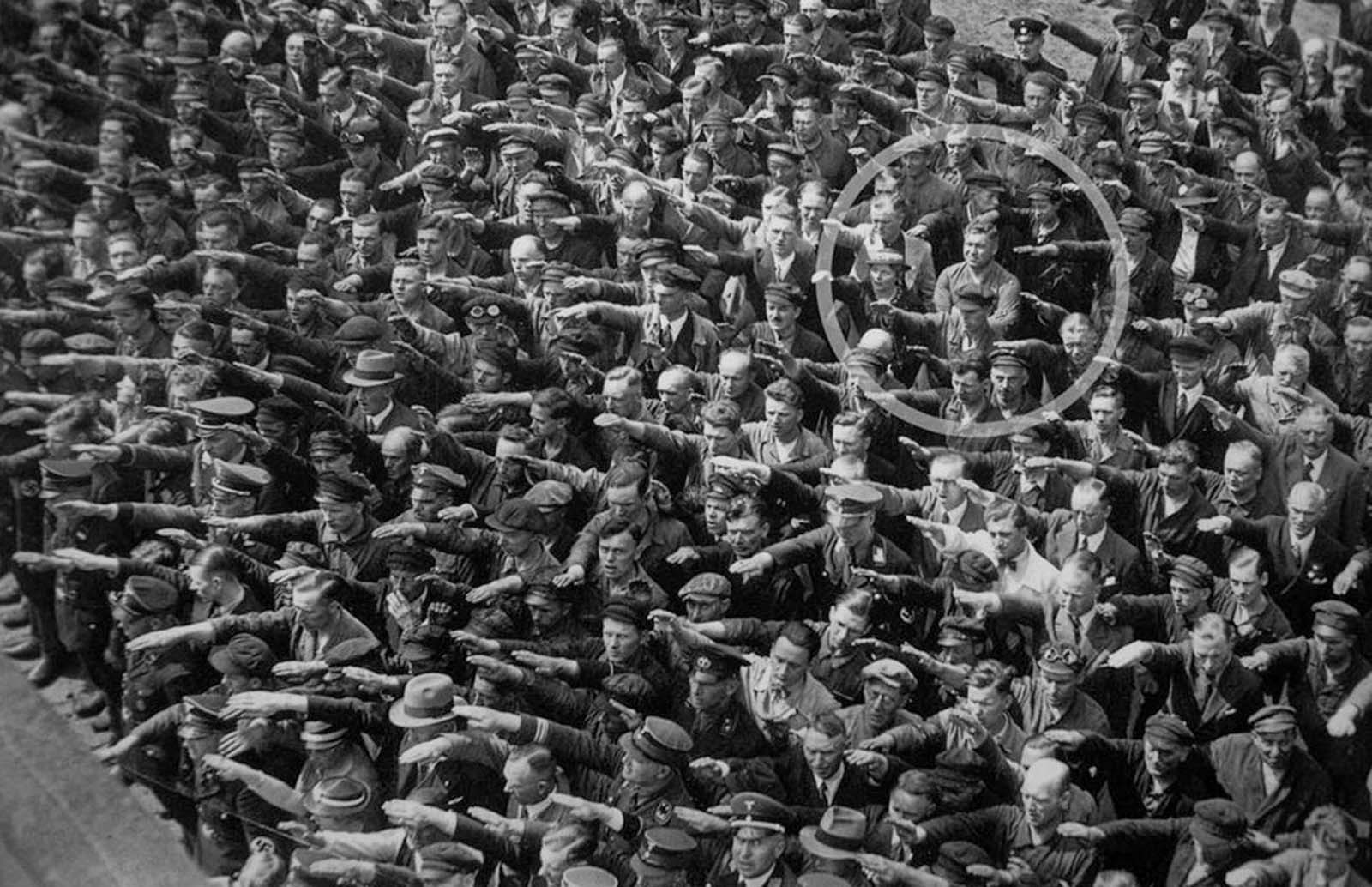
This is a huge factor in the transgender debate where powerful social institutions back the concept that “feelings” trump biological facts. Just a few generations ago, such assertions could have landed you in a rubber-padded room... Richard Dawkins is a rare holdout to Modern/ Enlightenment thinking in his rejection of transgender ideology. While I don't accept his worldview, I can admire his courage to go against the current propaganda (and it's Inquisition/Cancel Culture). Jordan Peterson is another such holdout. These men remind me somewhat of the 1930's era photo below of a Nazi rally in Germany which has everyone in the crowd is raising their arm in the Nazi salute, except one man... Most will follow the herd.
Letting “feelings” trump biological facts is not just a philosophical concern. As Postmodernism grows in influence, caring about facts becomes a secondary (or tertiary) issue... A number of years ago, reflecting on the possible repercussions of postmodern thought the British anthropologist Ernest Gellner observed (1992/1999: 93) :
Quite probably, the break-through to the scientific miracle was only possible because some men were passionately, sincerely, whole-heartedly concerned with Truth. Will such passion survive the habit of granting oneself different kinds of truth according to the day of the week?
Notice how Gellner's comment echoes in this description of Sam Altman, CEO of OpenAI, which appears in a recent New Yorker article by Ronan Farrow and Andrew Marantz (2026)
Yet most of the people we spoke to shared the judgment of Sutskever and Amodei: Altman has a relentless will to power that, even among industrialists who put their names on spaceships, sets him apart. "He's unconstrained by truth," the board member told us. "He has two traits that are almost never seen in the same person. The first is a strong desire to please people, to be liked in any given interaction. The second is almost a sociopathic lack of concern for the consequences that may come from deceiving someone."
Perhaps Altman may in fact be an archetypical Postmodern. But it is more likely that the bureaucrat is the ultimate Archetypical Postmodern. With few exceptions, the Postmodern's only ethical conscience is his/her paycheck. Thus he who controls the Postmodern's paycheck, owns their soul and insures postmodern bureaucrat's utter servility[4]. Since the postmodern, as the French intellectuals are fond of saying "The West has come to the end of the old Grand Narratives or meta-narratives". Thus when it comes to ethical issues, the postmodern has no Absolute moral reference point to guide him/her. And significantly when the State abuses it's powers, the Postmodern citizen or bureaucrat has no moral reference point above the State with which he/her might criticise the State.
This explains why, medical personnel during Covid so easily ignored blatant and massive violations of the Nuremberg Code regarding informed consent. Generations of doctors and nurses have been trained in a system that has funnelled Big Pharma money into it. It is thus a system very much dependant on Big Pharma. I remember in the 1970s, med students telling me that Québec City doctors and their wives were treated from time to time to an all expenses paid junket on a cruise ship with a lavish gourmet meal served up by Big Pharma, with of course the intention of roping in doctors to prescribe meds they had developed. Of course such initiatives were rather crude and ineffective. No doubt, roping in government health ministers and doctors corporations is a much more effective way of going about such business. While the institution controlling the postmodern's paycheck may vary, either public or private, the servility of the postmodern bureaucrat is insured in any case. Isn't odd that while Alexander Solzhenitsyn's The Smatterers was written over 50 years ago, an essay focussing on the Soviet intellectual class, yet nonetheless describing so well the elitism, contempt of the masses and servility of the postmodern class presently in power (Solzhenitsyn 1974: 246-247)
It is all very well to charge the working class at the present time with being excessively law-abiding, uninterested in the spiritual life, immersed in philistinism and totally preoccupied with material concerns — getting an apartment, buying tasteless furniture (the only kind in the shops), playing cards and dominoes or watching television and getting drunk — but have the smatterers, even in the capital, risen all that much higher? Dearer furniture, higher-quality concerts, and cognac instead of vodka? But it watches the same hockey matches on television. On the fringes of smatterdom an obsession with wage-levels may be essential to survival, but at its resplendent center (in sixteen republican capitals and a handful of closed towns) it is disgusting to see all ideas and convictions subordinated to the mercenary pursuit of bigger and better salaries, titles, positions, apartments, villas, cars (Pomerants: "A dinner service is compensation for lost nerves"), and — even more — trips abroadl (Wouldn't this have amazed the prerevolutionary intelligentsia
It needs explaining: new impressions, a gay time, the good life, an expense account in foreign currency, the chance to buy gaudy rags.... For this reason I think even the sorriest member of the prerevolutionary [Russian] intelligentsia would refuse to shake hands with the most illustrious of our metropolitan smatterers today.) But what distinguishes the mentality of the Moscow smatterers more than anything else is their greed for awards, prizes and titles for beyond the reach of the working class or the provincial smatterers — the prize money is higher, and what resounding titles they are: "People's Artist (Actor, etc.)... Meritorious Practitioner... Laureate..."! For all this people are not ashamed to toe the line punctiliously, break off all unapproved friendships, carry out all the wishes of their superiors and condemn any one of their colleagues either in writing or from a public platform, or simply by refusing to shake his hand, if the party committee orders them to. (...)
Everybody who lives in our country pays dues for the maintenance of the obligatory ideological lie. But for the working class, and all the more so for the peasantry, the dues are minimal, especially now that the financial loans which p used to be extorted annually have been abolished (it was the fake voluntariness of these loans that was so perfidious and so distressing: the money could have been appropriated by some other means); all they now have to do is vote every so often at some general meeting where absenteeism is not all checked with particular thoroughness. Our state bailiffs and ideological inculcators, on the other hand, sincerely believe in their Ideology, many of them having devoted themselves to it out of long years of inertia or ignorance, or because of man's psychological quirk of liking to have a philosophy of life that matches his basic work.
But what of our central smatterers? Perfectly well aware of the shabbiness and flabbiness of the party lie and ridiculing it among themselves, they yet cynically repeat the lie with their very next breath, issuing "wrathful" protests and newspaper articles in ringing, rhetorical tones, and expanding and reinforcing it by their eloquence and style! Where did Orwell light upon his doublethink, what was his model if not the Soviet intelligentsia of the 1930s and 1940s? And since that time this doublethink has been worked up to perfection and become a permanent part of our lives.
But getting back to “feelings” trumping biological facts, if reason and logic (even mathematics...) are viewed as no more than arbitrary cultural conventions (as postmoderns assert), such a statement brings into question the whole concept of the university, supposedly a haven for universal knowledge, which, ironically, has become the postmodern's favourite refuge and a haven for nonsense...
There is another piece of the puzzle that needs attention. If one accepts the postmodern worldview as a reaction to the Judeo-Christian world-view, then one must account for the fact that with few exceptions, Christians get their moral law from Judaism, more specifically Moses. The other factor is that about 2/3rds of the Christian Bible comes from the Jews. This explains why postmoderns so naturally slip into Jew-Hatred (Anti-Semitism). It just a logical step. But being a hypocritical sect, postmoderns will immediately complain they are not racists and frame their prejudices as "political opinion", that is using the expression "Anti-Zionism". But strip away the hypocrisy and the end result is that Jew-Hatred is now just as popular as it was in the 1930s...
* This text is an excerpt from a book review of Auron MacIntyre's Total State.
Cohen, Roger (1999) Why? New Eichmann Notes Try to Explain. New York Times August 13th
Farrow, Ronan and Andrew Marantz (2026) Sam Altman May Control Our Future—Can He Be Trusted? New interviews and closely guarded documents shed light on the persistent doubts about the head of OpenAI. (New Yorker - 6/4/2026)
Gellner, Ernst (1992/1999) Postmodernism, Reason and Religion. Routledge London/New York 108p.
Gosselin, Paul (1979) Myths of Origin and the Theory of Evolution. Samizdat
Gosselin, Paul (1986) Article reviews on the New (scientific) Priesthood by Eileen Barker. Samizdat
Gosselin, Paul (2006/2012) Flight From the Absolute: Cynical Observations on the Postmodern West. Volume I. Samizdat ix - 412 p
Gosselin, Paul (2017) Letter to Kurt: A review of Sirens of Titan. Samizdat
Gosselin, Paul (2022) Alasdair MacIntyre (1981) After Virtue: A book review. (Samizdat - 25/4/2022)
Gosselin, Paul (2023) A Brief Note on Universities as Propaganda Machines. (Samizdat - 25/7/2023)
Gosselin, Paul (2024) Échange avec un antisionniste québécois touchant la situation Hamas-Israël. (Samizdat - 14/2/2024)
Gosselin, Paul (2024) La Tentation totalitaire par Jean-François Revel. (Samizdat - 13/9/2024)
Gosselin, Paul (2025) La Religion woke, un compte rendu. (Samizdat - 10/8/2025) -> review of a book by Jean-François Braunstein
Klatzkin, Shmuel (2026) Higher Law and Human Law: The Religious Roots of American Freedom - From Martin Luther King Jr. to James Madison, liberty rests on a law above the state. (The American Spectator - 2/5/2026)
Jaki, Stanley M. (1974/1986) Science and Creation: From eternal cycles to an oscillating universe. Scottish Academic Press Edinburgh, London 377 p.
Lewis, CS (1945/2015) That Hideous Strength. (Samizdat, PDF, Canadian public domain text)
Lewis, Clive Staples (1960/1987) The World's Last Night and other Essays. Harvest New York 113 p.
Showalter, Monica (2026) So where does wokeism come from? A French intellectual gives the perfect bite-sized explainer It's like Eric Hoffer, come to back to life. (American Thinker - 16/5/2026)
Solzhenitsyn, Alexander (1974/1981) The Smatterers. pp. 229-278 - published in Solzhenitsyn, Alexander; Agursky, Mikhail; Evgeny Barabanov, A. B.; Borisov, Vadim; Korsakov, F.; Shafarevich, Igor - From Under the Rubble. Regnery Gateway Chicago IL 1974/1981 308 p.
Turley, Jonathan (2026) Assassination Sing-a-Long: Hasan Piker Mocks the Murdered Charlie Kirk to Cheering Crowd. (23/8/2026)
Vonnegut, Kurt Jr. (1975) Wampeters, Foma & Granfalloons, Dell Publishing Co. Inc, New York 238 p.
[1] - Or the Siècle des Lumières as the French would say.
[2] - CS Lewis, in an article initially published in 1952, recognized the ideological source of Darwinism and stated (1960/1987: 103):
... the attraction of Darwinism was that it gave to a pre-existing myth the scientific reassurances it required. If no evidence for evolution had been forthcoming, it would have been necessary to invent it. The real sources of the myth are partly political. It projects onto the cosmic screen feelings engendered by the Revolutionary period.
[3] - A lot of superficial “Evangelical” Self-fulfilment, Word-Faith theology is nothing more than repackaged postmodernism.
[4] this has parallels in the mindset of Nazi bureaucrats. In a New York Times article discussing newly released Adolf Eichmann archives, Roger Cohen brings up a note from Eichmann legal defense (1999)
''Obeying an order was the most important thing to me. It could be that is in the nature of the German.'' So, early on in memoirs published today by the German daily Die Welt, does Adolf Eichmann seek to explain his central role in the killing of six million European Jews by the Nazis.
Press File on Neototalitarianism. (Samizdat) -> French and English articles
Press File on postmodern intolerance. (Samizdat) -> French and English articles